Quick takeaways
- Smart implants can turn devices inside the body into sources of useful data.
- That data can help doctors monitor healing, pressure, rhythm, or device performance.
- The tradeoff is privacy, security, and deciding who controls the data.
A heart device can send an alert before its patient feels anything unusual. A connected implant can tell a doctor that a rhythm changed or a device needs attention before the next office visit.
“Smart implant” covers very different devices. Cochlear implants can be programmed wirelessly. Some cardiac devices report rhythm or equipment data from home. Closed-loop diabetes systems connect a glucose sensor to an insulin pump, though the sensor and pump are separate pieces. The common idea is a device that measures something and changes care between appointments.
The clinical case for remote monitoring is strong. A 2021 study published in the European Heart Journal found that patients with heart failure who were monitored remotely through an implanted sensor had significantly lower rates of hospitalization than those receiving standard care. The device was detecting fluid buildup in the lungs up to two weeks before symptoms became severe, giving physicians time to adjust medications before a crisis developed.
Neural implants extend the concept beyond cardiac care. Neuralink received FDA approval for human trials in 2023 and implanted its first device in a patient in early 2024. The initial application is for patients with paralysis, with the goal of allowing them to control computers and external devices through thought. Synchron had already implanted its stentrode device in several patients and published encouraging early data showing that locked-in patients could control digital interfaces with meaningful accuracy.
Wireless communication also creates a security problem. Researchers have found exploitable weaknesses in older cardiac-device protocols. Manufacturers have improved their systems, but an implant cannot be patched or replaced as casually as a phone.
Patients should know who can read the data, whether an insurer can request it, and what happens if the company running the app is sold. Those answers belong in the consent process before the device starts reporting.
I keep coming back to who watches the alerts and what happens next. A stream of data helps only when someone is responsible for responding to it.
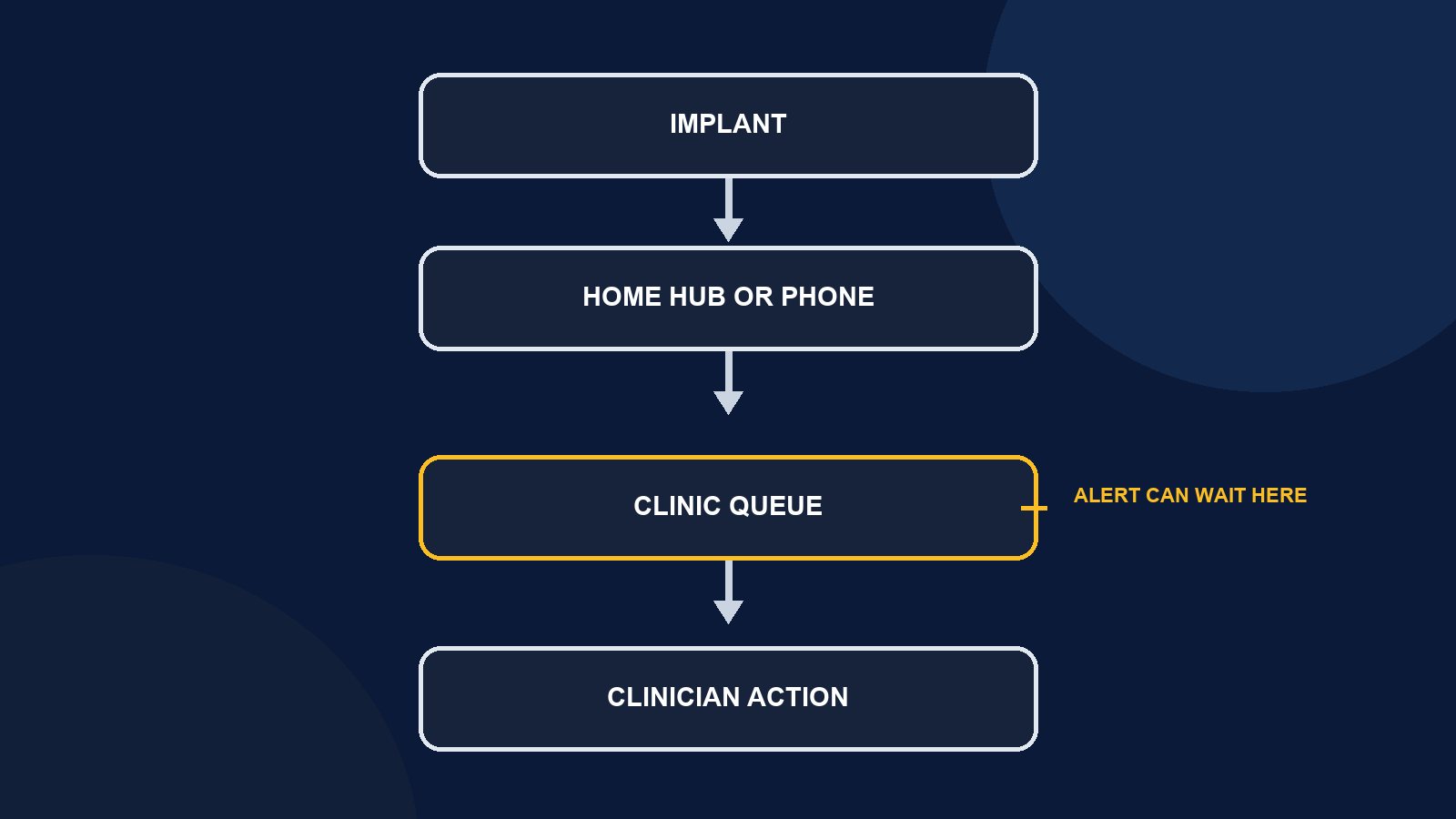
An alert needs a destination
Remote monitoring can fail when a clinic receives too many notifications and an urgent one sits in a queue. In that case, the failure sits in the care system around a working implant.
I would want patients to know which changes trigger a call and how quickly someone reviews them. I would also want a backup plan for a dead phone, lost connection or software outage.
The best implant may be the one a patient rarely thinks about. It does its assigned job, sends only useful information and gives the clinical team enough time to act.