Quick takeaways
- Robotic surgery can improve control and precision in some procedures.
- The robot is still a tool controlled by a surgeon, not an independent operator.
- The evidence depends on the procedure, the surgeon, and the hospital using it.
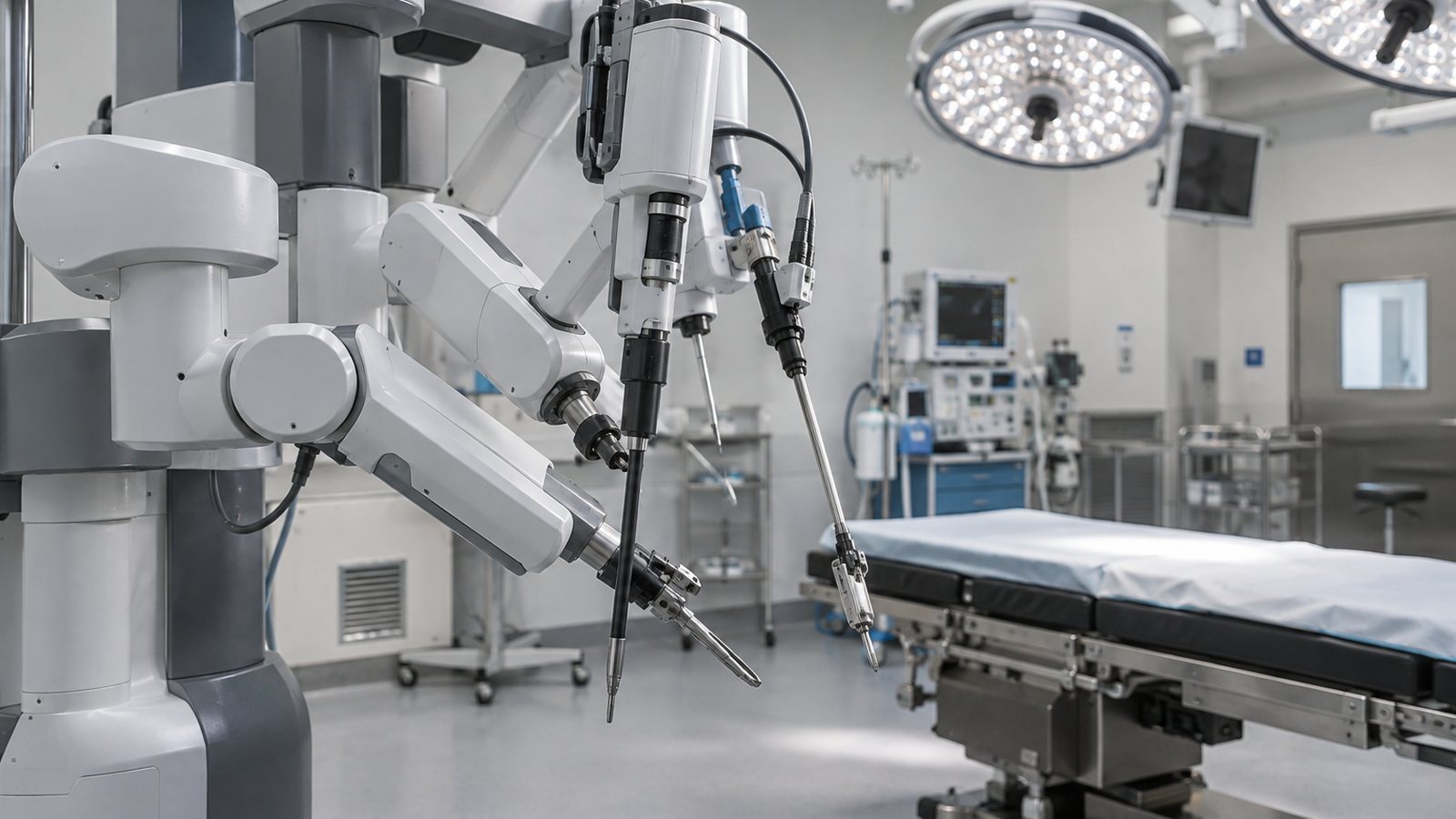
The surgeon at the console is sitting about ten feet from the operating table. Their hands move in small, precise motions. On the other side of the room, a robotic arm mirrors those movements at the tip of a tiny instrument inside the patient's body. The da Vinci surgical system, made by Intuitive Surgical, has been performing procedures like this since 2000, and it is now present in roughly 70 percent of major United States hospitals.
The name overstates the machine's independence. A surgeon decides where to cut and controls every movement from the console.
The system translates the surgeon's hand movements into smaller motions at instruments placed through tiny incisions. Its camera provides a magnified three-dimensional view, and the instrument tips bend inside a tight space. Those features may help in specific procedures, depending on the surgeon's experience.
For certain procedures, the evidence backs this up. Prostatectomies performed robotically have lower rates of incontinence and sexual dysfunction compared to open surgery. Hysterectomies done with robotic assistance tend to involve less blood loss and shorter hospital stays. For colorectal surgery, robotic platforms allow access to tight spaces in the pelvis that are difficult to reach any other way.
For many common procedures, outcomes are comparable to traditional laparoscopic surgery at a fraction of the cost. A da Vinci system runs about 2 million dollars to purchase and over 100,000 dollars a year to maintain. That cost ultimately gets passed to patients and insurers. Some researchers have argued that hospitals buy robotic systems as marketing tools as much as medical ones, since patients request them even when the evidence does not clearly support their superiority.
There is also a learning curve. Surgeons need significant experience before they reach full proficiency with robotic platforms, and hospitals with lower surgical volumes may have robots that sit underused. Studies have shown complication rates are higher in the early period of a surgeon's robotic training, which raises questions about how that training should be structured and disclosed to patients.
New systems are adding better feedback and giving hospitals alternatives to da Vinci. Competition may lower prices. I am more interested in whether it produces better patient data, because a cheaper robot can still be unnecessary for the wrong procedure.
If I were considering robotic surgery, I would ask how many times the surgeon had performed that exact operation with the system. I would also ask what advantage it offers over ordinary laparoscopy in my case. The equipment label gives no answer about whether it improves the outcome.
Experience may outweigh the brand
A hospital can advertise a new platform. It cannot buy a surgeon's learning curve. Outcomes during the first cases may differ from outcomes after hundreds, which is why procedure-specific experience is a fair question.
The comparison also has to be honest. Open surgery may be the wrong benchmark when ordinary laparoscopy already uses small incisions. If the robot costs more and produces the same recovery, patients should know that.
I like the engineering behind scaled hand movements and a magnified view in a tight space. I would still wait for a patient outcome to improve before giving the equipment credit.