Quick takeaways
- Medical chatbots can be useful for explaining terms or preparing questions.
- They can also sound calm and confident while missing safety details.
- Patient-specific advice is riskier than general education.
- The safest use is helping patients ask better questions before they talk to a clinician.
Confidence makes mistakes harder to spot
Medical chatbots often sound polished, and a confident answer can feel trustworthy even when the model is missing context, using old information, or giving advice that does not fit the patient.
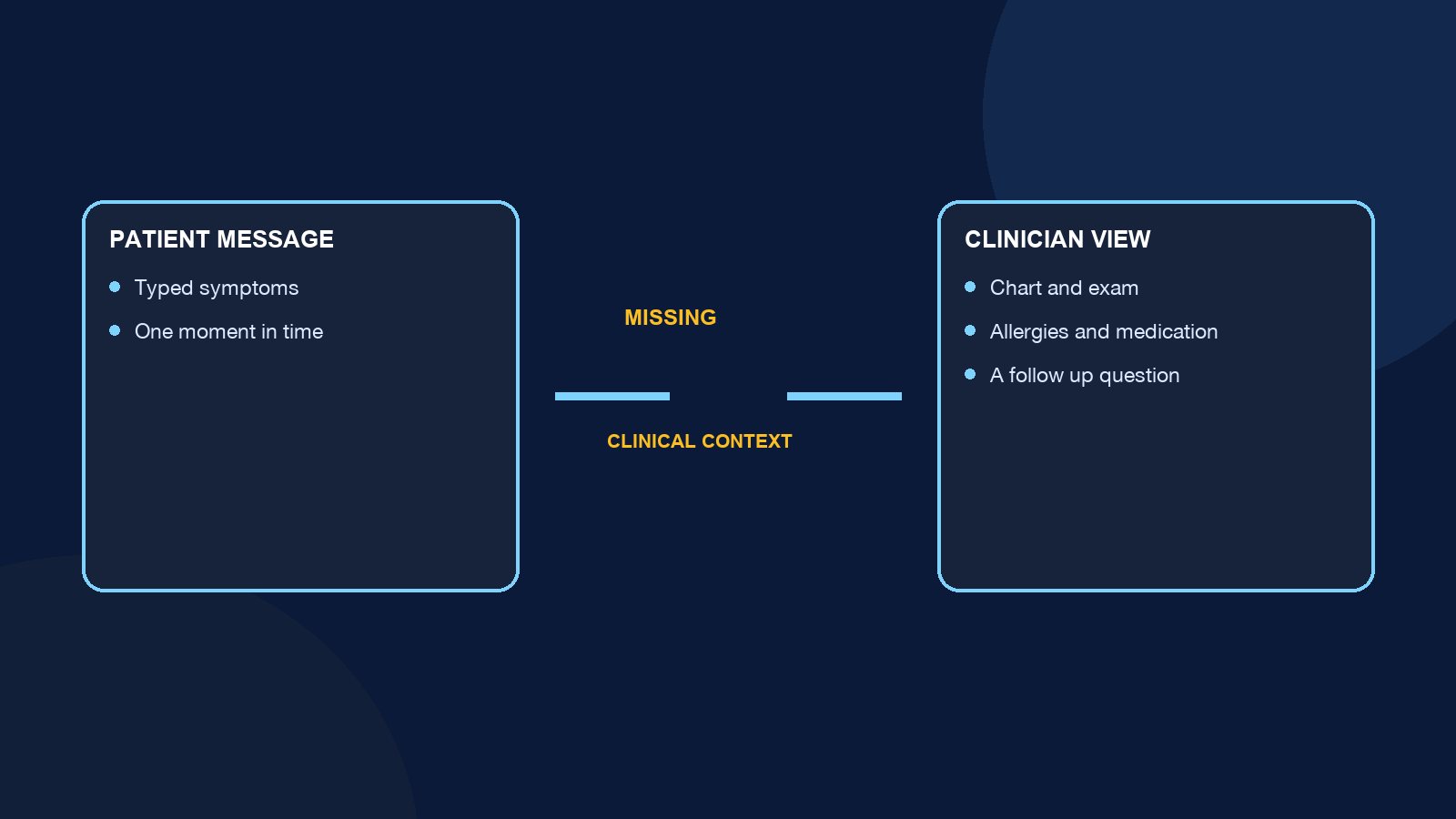
For general education, that may be manageable. For actual medical decisions, the stakes change. A chatbot does not know the full chart, physical exam, allergies, medications, or the small detail that would make a doctor stop and ask another question.
Chatbot studies disagree
A JAMA Internal Medicine study found that chatbot responses to patient questions were rated higher for quality and empathy than physician responses from an online forum (Ayers et al.). The comparison covered written answers to public posts, so it did not test real clinical care.
Chen et al. studied AI-assisted replies to cancer patient messages. Drafts could help with efficiency, although some unedited responses carried serious harm risk (Chen et al.). I am comfortable with drafting when a clinician reviews the result. Patient-specific decisions need that review even more.
Where chatbots can help
A good use is translating medical language. If a patient wants to understand what LDL means, what a CT report is saying, or what questions to ask at an appointment, a chatbot can help them walk in more prepared.
A bad use is asking whether chest pain is probably fine or whether to change a medication dose. The chatbot is making a clinical decision with an incomplete history.
The missing detail problem
A chatbot only sees what the user typed. “My chest hurts” could describe a sore muscle or an emergency. Age, medications and the way the pain began can change the response. The model may give a smooth answer before it knows any of them.
A plain-language explanation of a term on a lab report can help someone prepare questions. Asking whether to ignore a new symptom gives the model a decision it cannot safely make with missing evidence.
I also think the interface should show uncertainty clearly. A tiny disclaimer below a confident paragraph is weak protection. If the system lacks the information to answer safely, it should stop and say what is missing.
My Thoughts
Patients already use chatbots. I would be direct about the line between learning a term and making a medical decision.
I would use AI to prepare for a medical appointment. The final call belongs to the clinician who knows the patient and can be questioned when something does not add up.