Quick takeaways
- BPC-157 has mostly animal and cell evidence, not strong human sports-injury trials.
- Online peptide products can have purity, dosing, and sterility problems.
- BPC-157 is prohibited in sport by WADA.
- The recovery claims are way ahead of the evidence most athletes need.
Why peptides got popular
BPC-157 is usually sold online as a recovery peptide for tendon and joint injuries. The medical-sounding label makes those claims feel more established than they are.
Most of the strongest claims come from animal studies, cell studies or anecdotes. None can show that injecting BPC-157 safely improves healing in an injured athlete.
Human evidence is missing
Some preclinical research suggests BPC-157 may affect tendon healing pathways, blood vessel signaling, inflammation, and tissue repair. Those findings keep the topic alive in lifting circles. McGuire et al. reviewed the field in 2025 and described interesting regenerative signals while making clear that strong human clinical evidence is still missing (McGuire et al.).
Pain can improve for many reasons, and a tendon may feel better before it is ready for full load. I would need human trials establishing dose, safety and benefit before treating BPC-157 as a normal recovery tool.
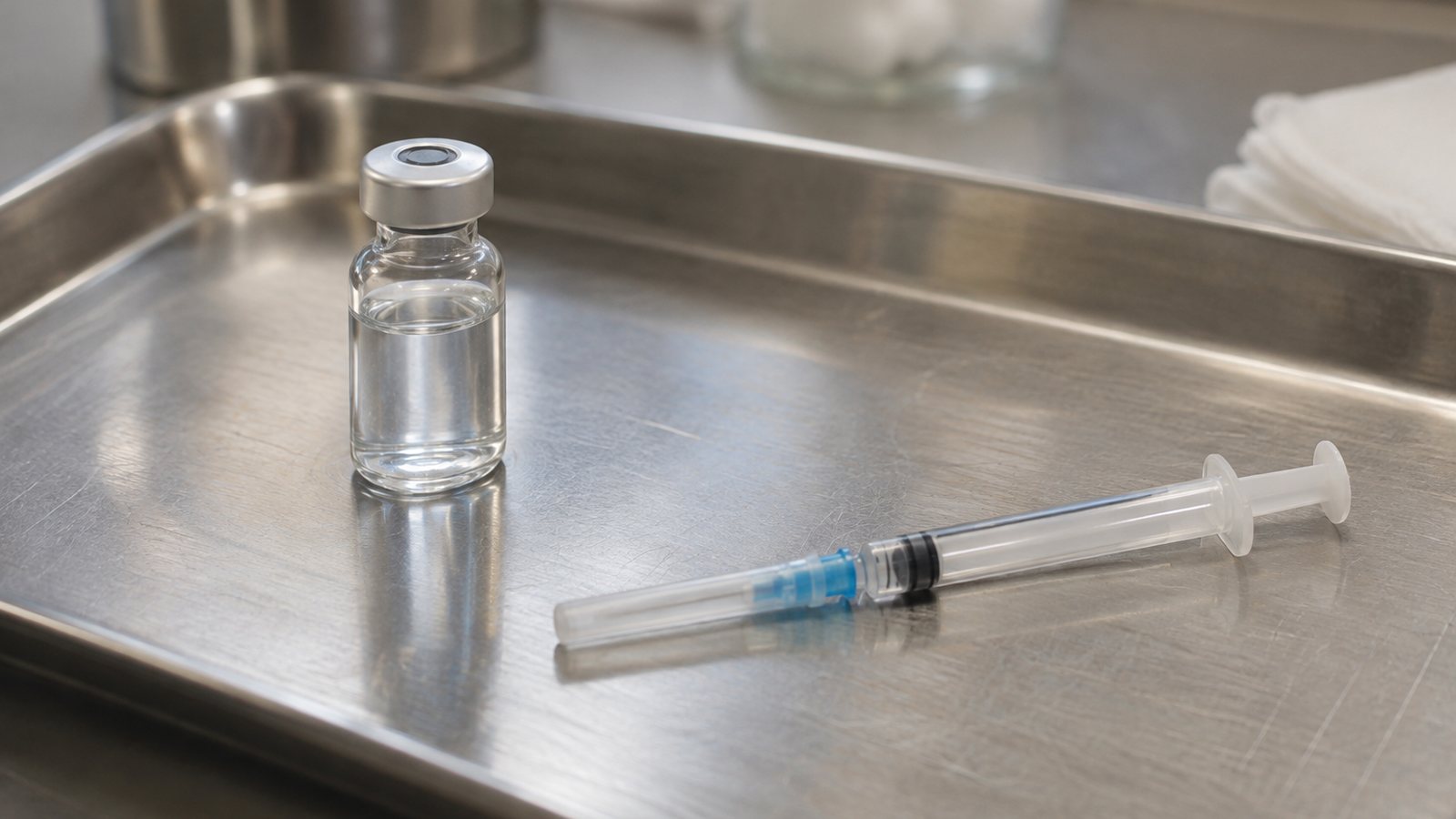
The vial itself is part of the risk
With unregulated injectable peptides, the risk is also the product. Purity, contamination, wrong dosing, and unsafe injection practices all change the situation fast. Xu et al. reported preclinical safety data for synthetic BPC-157, but that still does not prove that an online vial is sterile, correctly dosed, or safe to inject after a workout injury (Xu et al.).
BPC-157 is also prohibited by the World Anti-Doping Agency under the category for non-approved substances (WADA). For athletes, that alone should slow down the casual attitude.
Why the testimonials are convincing
Injuries change week by week. Pain can improve because tissue healed, because training changed or because the person expected the treatment to work. If someone starts BPC-157 at the same time they stop aggravating the injury, the peptide gets all the credit.
That is why a controlled human trial is needed. It separates recovery that would have happened anyway from recovery caused by the drug. Animal research can justify running that trial. It cannot substitute for it.
I would also want to know what is in the vial. An unapproved product bought online does not come with the same manufacturing checks as a prescription medicine. Even a promising molecule becomes a different risk when the dose and purity are uncertain.
My Thoughts
I understand the interest because normal rehabilitation can feel painfully slow. That frustration also makes an unproven shortcut easier to accept.
Until there is better human evidence and regulated medical use, I would put BPC-157 in the hype-first category. Rehab and sensible load management have a much better claim on my trust.