Quick takeaways
- Ambient scribes are less flashy than diagnostic AI, but they may be more noticeable to patients.
- The main benefit is reducing documentation work that pulls doctors away from the visit.
- The doctor still has to review the note, because small documentation errors can affect later care.
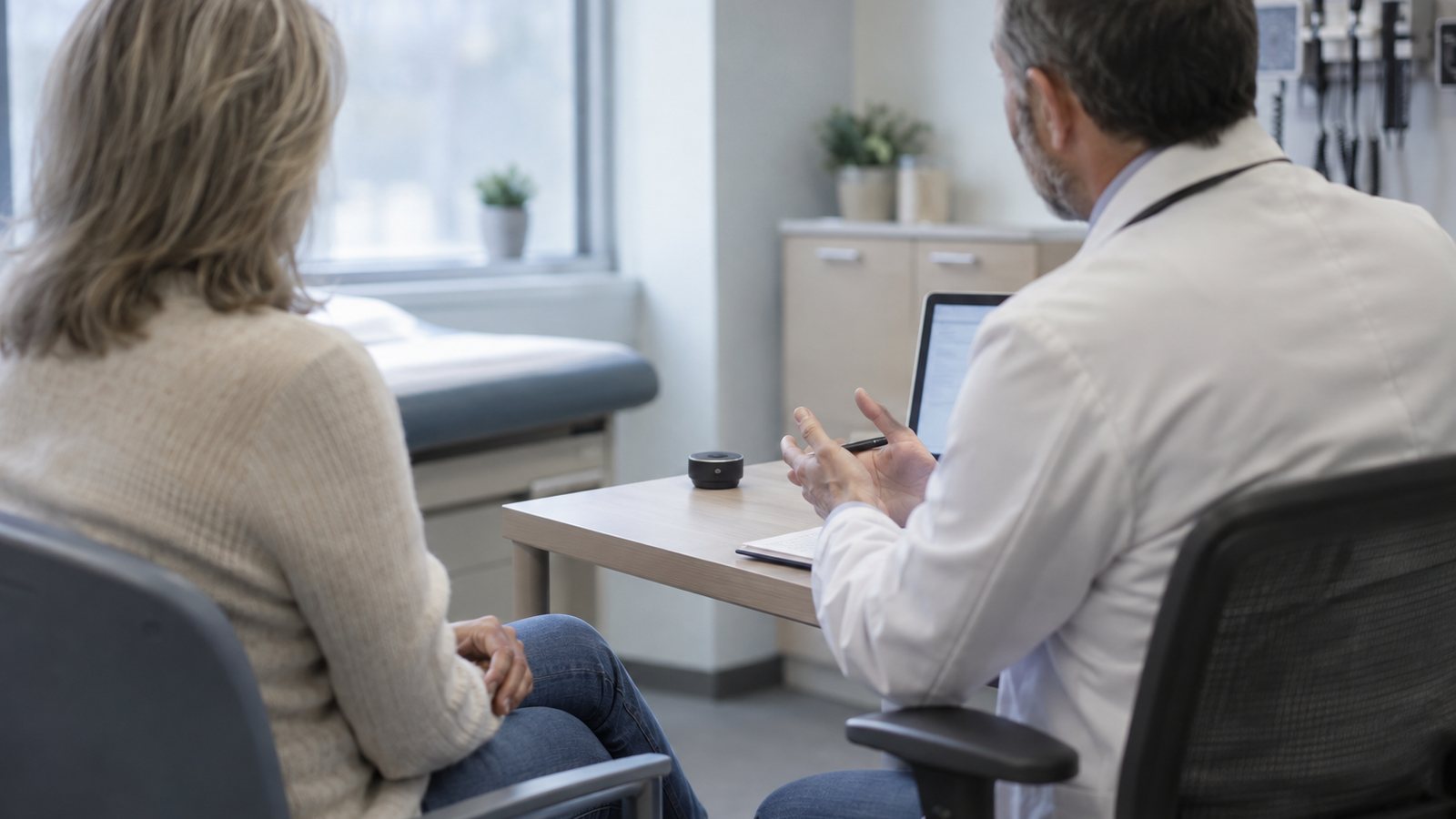
Ambient AI scribes sit in the background of a doctor visit, listen with permission and turn what they hear into a draft note. Their work is less visible than a diagnostic model.
The target is documentation. Doctors spend enormous time writing notes and finishing charts after clinic ends. Patients notice when the doctor is staring at a screen instead of listening.
Why doctors want this
Ambient scribes do not need to be perfect diagnosticians to be useful. Their job is to capture the visit, organize the history and draft the note so the clinician can review and edit it. If the draft is good enough, it can reduce the clerical load and let the doctor focus more on the patient in the room. A patient may notice more eye contact and less typing before noticing the technology itself.
The version patients might notice
What I like is that it targets the part of the visit that already feels broken: the screen, the note and the after-hours charting.
If this works, a patient may simply remember that the doctor looked up more often. That sounds useful to me in a normal clinic visit.
The note still needs an owner
A draft can leave out a symptom, place a medication in the wrong section or make an uncertain statement sound settled. The doctor has to review it closely enough to catch those errors. If review becomes one quick click at the end of a long day, the time saving may create a different risk.
Patients should also know when the room is being recorded and what happens to the audio. Is it deleted after the note is created? Can it be used to train another model? A small notice buried in registration paperwork would not feel like meaningful permission to me.
This is one of the medical AI uses I find easiest to support because the clinical decision stays with the person in the room. The model can write the first draft. The doctor has to own every word that remains.
The risks are different
A scribe may misunderstand or omit something in the note, and that mistake can follow the patient into later care. The tool also listens to a clinical visit, so patients need a clear explanation of consent and data protection.
That means the doctor still has to own the note. AI can draft, but it should not silently become the author of record.